
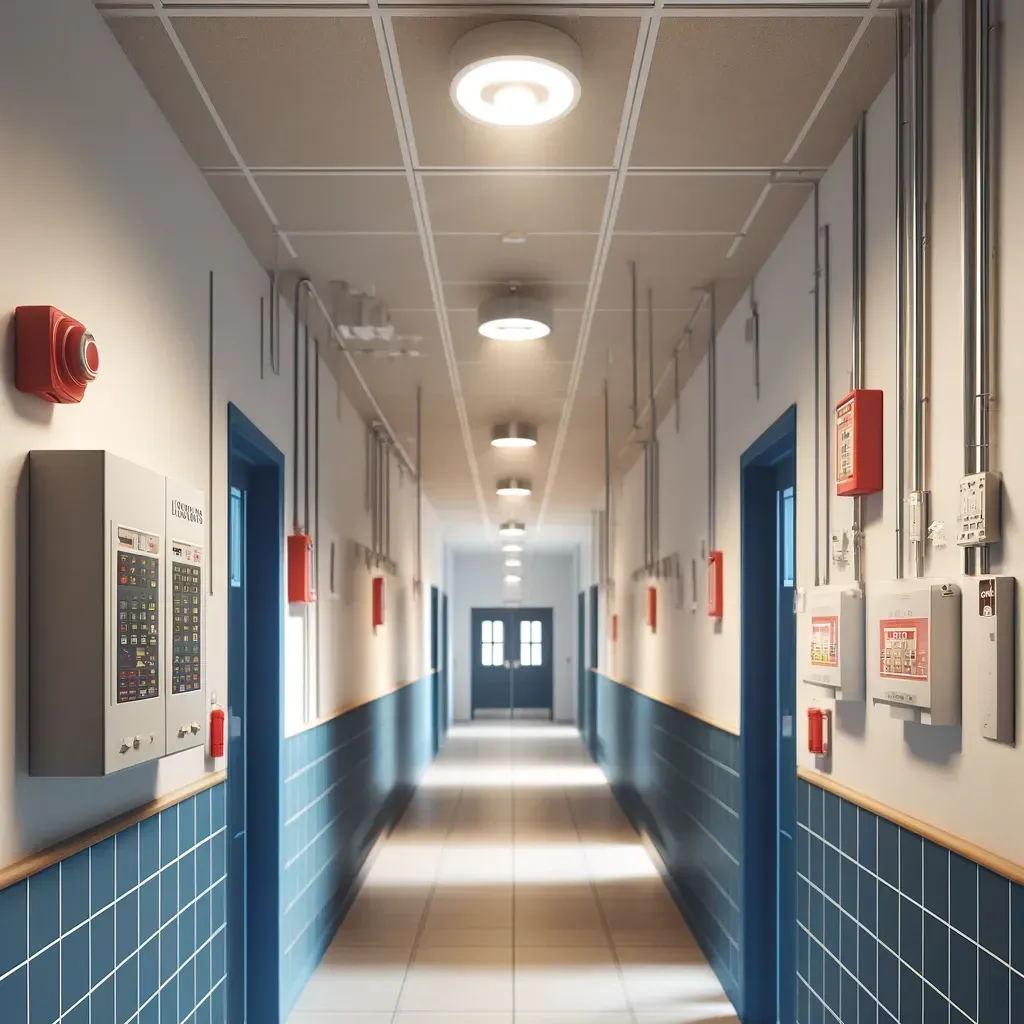
When it comes to the safety of our children, there is no compromise. Fire alarms are a crucial component of school safety, providing the earliest possible warning in the event of a fire. But not all systems are created equal, and selecting the right one can be the difference between a close call and a tragedy.
School administrators must understand the complexity and functionality of modern fire alarm systems. For example, a ‘monitored fire alarm system’ ensures that any trigger is immediately communicated to emergency services, drastically reducing response times. It’s also vital to comply with ‘fire alarm regulations for commercial buildings’, including schools, which dictate the necessary standards and regular maintenance schedules.
Moreover, advancements in technology now allow for ‘wireless fire alarm systems’, which can be less intrusive and quicker to install, causing minimal disruption to the school environment. ‘Fire alarm system monitoring requirements’ also necessitate regular checks by a ‘commercial electrician’ or a specialist with knowledge of ‘fire alarm systems for commercial buildings’.
In the heart of Orlando, the need for robust fire alarm systems in schools is not just about meeting state regulations—it’s about the assurance of safety for our children. From Winter Park to the bustling downtown, the diversity of our educational institutions calls for tailored solutions that address unique structural layouts and population densities. The importance of having a fire alarm system that is both comprehensive and up to code cannot be overstated—whether for a compact elementary school or a sprawling high school campus.
Given Orlando’s unique weather patterns, especially during storm season, the electrical resilience of fire alarm systems is paramount. Systems must be capable of withstanding lightning strikes and power surges—two common occurrences in Central Florida. Hence, the integration of surge protectors and routine maintenance by qualified electricians can mitigate the risk of system failure when it’s needed the most.
Moreover, Orlando’s educational facilities, much like its commercial and industrial counterparts, are transitioning to smart technologies. Wireless fire alarm systems, for instance, are becoming increasingly popular. They offer less intrusive installation processes and seamless scalability for future expansions. This wireless shift reflects a broader trend in Orlando’s push towards smart buildings and IoT integration in infrastructure.
On a more community-based level, the dialogue between electrical contractors and Orlando families is crucial. It is not just about installation but also about education and awareness. Residential electricians in Orlando often host workshops on fire safety, teaching families and school staff about fire alarm monitoring requirements, best practices for system upkeep, and the proper protocols to follow when alarms sound.
As a conclusion to this deep dive into fire alarm systems in Orlando schools, it is evident that while the technology is sophisticated, the objective is simple: safeguarding the future, one school at a time. With the collaboration between technology providers, electricians, and the local community, Orlando can set a benchmark for school safety not just in Florida, but across the nation.
To safeguard the lives of students, it is essential that schools consult with ‘electrical contractors’ specializing in ‘commercial fire alarm systems’ to design and maintain a system that meets all legal ‘fire alarm requirements’ and best serves their unique environment. Fire alarm systems in schools are an essential facet of educational safety. In Orlando, these systems must be robust, resilient, and smart to adapt to the environmental demands and technological advancements of our times. Electricians and electrical contractors are the unsung heroes who install, maintain, and upgrade these lifelines. Their work, powered by cutting-edge technology and an unwavering commitment to safety, ensures that the sanctity of education is never marred by preventable tragedy.